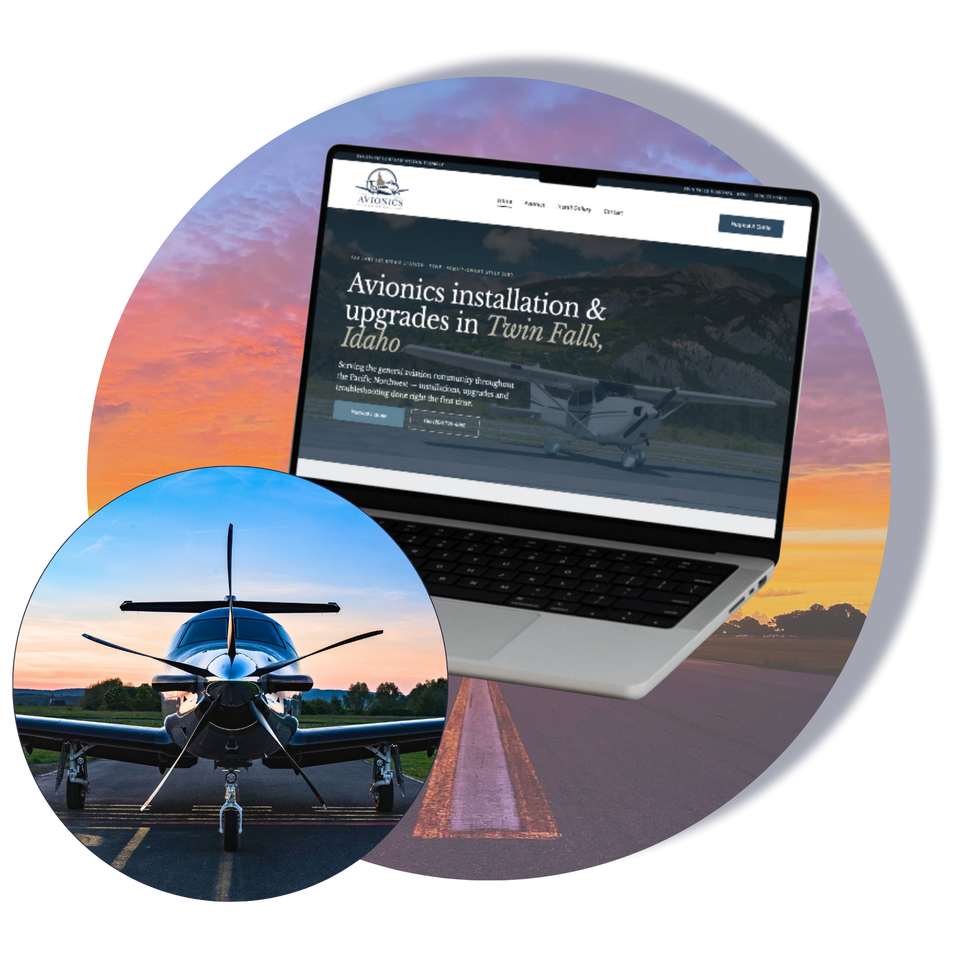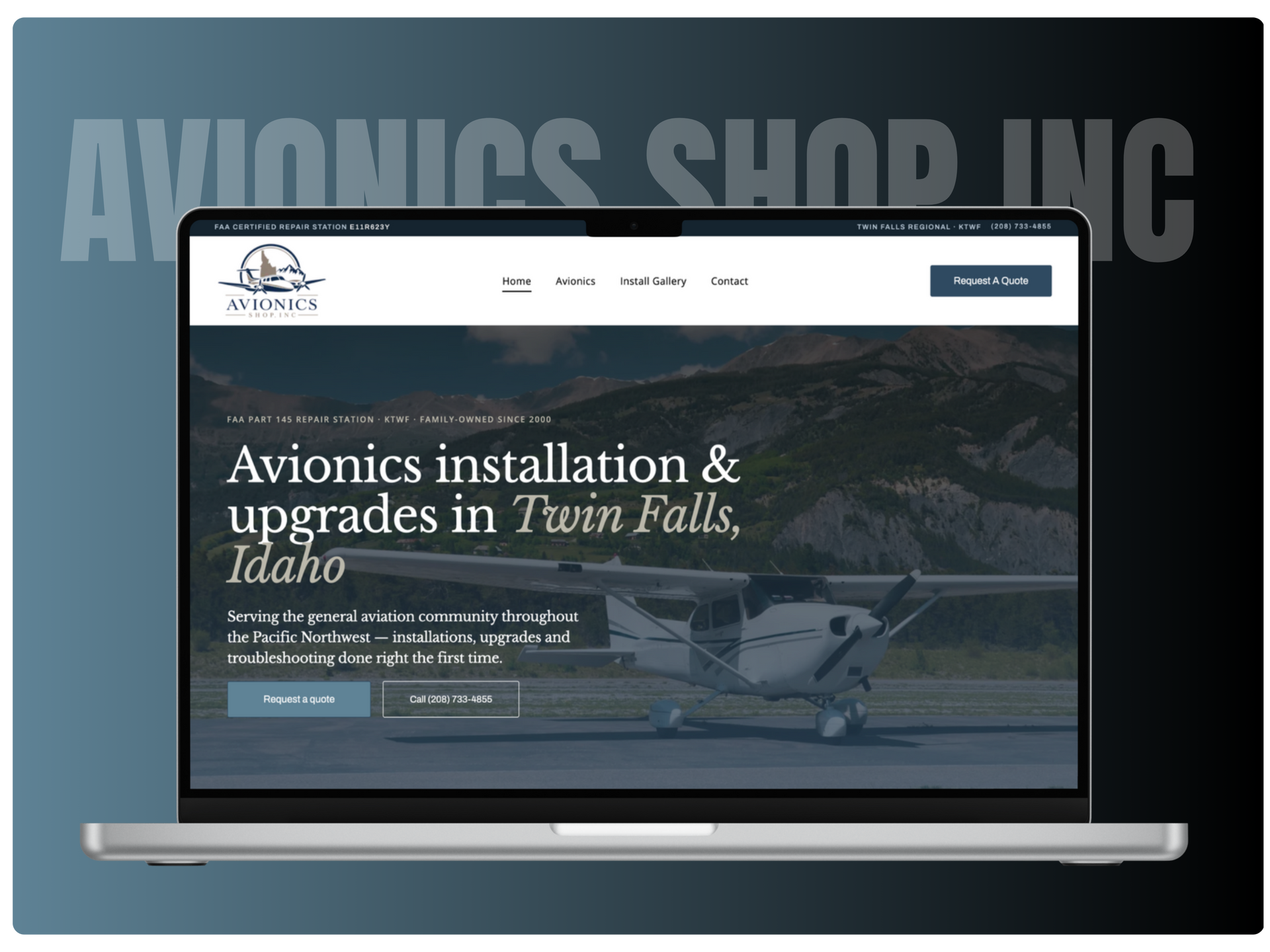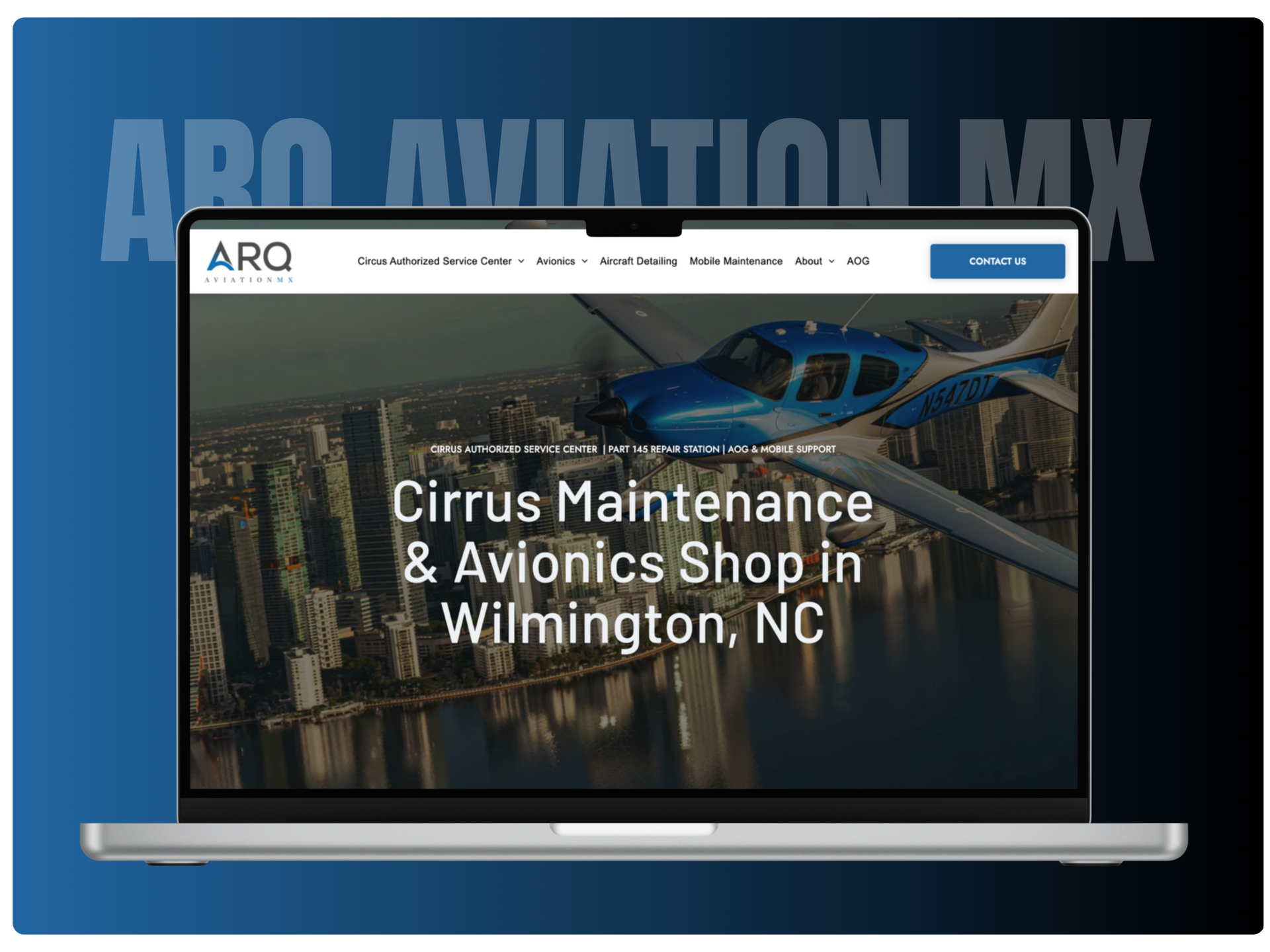
Using a strategy-first process, we design brands and websites that prioritize accuracy and reflect your real-world operations, ensuring your clients understand your value and feel confident engaging for the long term.

Web & Graphic Design For Aviation

Service Aviation Creative Agency
Experience 23+ Years

AVIATION CREATIVE AGENCY

Web & Graphic Design for Aviation

Using a strategy-first process, we design brands and websites that prioritize accuracy and reflect your real-world operations, ensuring your clients understand your value and feel confident engaging for the long term.

The Methodology

Using a strategy-first process, we design brands and websites that prioritize accuracy and reflect your real-world operations.

Aviation Businesses are
Evaluated Before
Anyone Reaches Out

Aviation Operational Mastery

In aviation, your website is not just marketing — it's part of how your operation is judged.

Prospective clients review it to understand:

  • What you actually do
  • How credible your capabilities are
  • Whether you're the right fit for their needs

If that information isn't clear, precise, and easy to navigate, confidence drops before the first call ever happens.

Confidence & Precision

Lexington Creative designs aviation websites that represent your services accurately and build trust before contact begins.

Aviation

Aviation Businesses are Evaluated Before Anyone Reaches Out

In aviation, your website is not just marketing — it's part of how your operation is judged.

Prospective clients review it to understand:

What you actually do

How credible your capabilities are

How credible your capabilities are

If that information isn't clear, precise, and easy to navigate, confidence drops before the first call ever happens.

Lexington Creative designs aviation websites that represent your services accurately, professionally, and in a way that builds trust before contact begins.

23+

Years in Aviation

Aprile Blair Aviation Experience
THE LEADERSHIP —

LED BY
AVIATION
EXPERIENCE

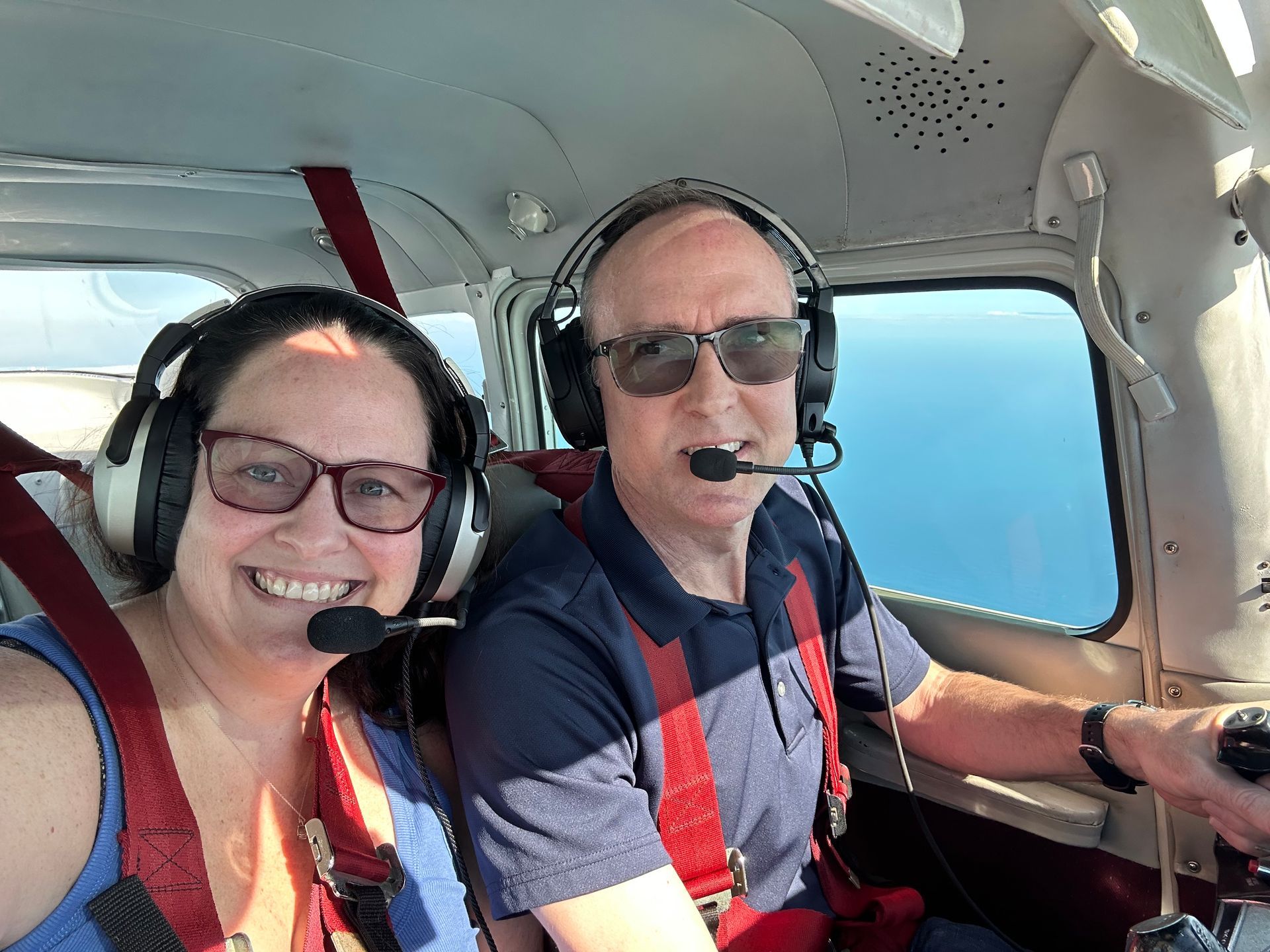
Lexington Creative is led by Aprile Blair, who brings 23 years of experience in aviation sales and marketing to her work in strategic web design.

That exposure changes how your website is approached.

You're not starting by explaining:

  • What your operation does
  • How your services are evaluated
  • Why certain language must be precise

The work begins with industry context already in place — and a clear understanding of how aviation businesses need to present themselves publicly.

Book a Discovery Call
Aprile Blair Aviation Experience
THE LEADERSHIP —

LED BY
AVIATION
EXPERIENCE

Lexington Creative is led by Aprile Blair, who spent 23 years in aviation sales and marketing before moving into strategic web design.

That background changes how your website is approached.

You're not starting by explaining:

  • What your operation does
  • How your services are evaluated
  • Why certain language must be precise

The work begins with industry context already in place — and a clear understanding of how aviation businesses need to present themselves publicly.

Book a Discovery Call
Aviation Background
The Industry Standard —

Aviation is Too
Complex for a
Generalist

In aviation, the way a business is described publicly carries weight. Service wording, implied capabilities, and overall tone shape how your operation is perceived before anyone speaks to you.

When a designer doesn't understand the industry:

  • Language needs constant clarification
  • Claims must be rewritten or softened
  • Revisions increase late in the process
  • You end up reviewing everything closely to avoid misrepresentation

The project may look finished — but it never feels fully settled.

Stop being the 'Subject Matter Expert' for your own web designer.

When a designer doesn't understand the complexities of aviation, the burden of accuracy falls on you.

At Lexington Creative, we bridge that gap.

We design with an insider's perspective so you can stop monitoring the details and start trusting your website to explain your value before the first call.

Our Capabilities —

What We Offer

01/

Website Strategy & Design

Every project starts with structure. Before design begins, we define:

  • What your services need to communicate
  • How your expertise should be represented
  • How prospects evaluate businesses like yours

Design follows strategy, not the other way around.

All websites are built on LEX, our custom platform powered by Duda, designed for reliability, clarity, and ease of use.

The goal is a site that supports informed inquiries and reflects how your operation truly works.

02/

SEO Foundation Setup

SEO is handled at the structural level from the beginning. Each site includes:

  • Page structure aligned with search intent
  • Clean metadata and hierarchy
  • On-page SEO fundamentals that support proper indexing

This ensures your aviation services are discoverable by the right audience — without relying on gimmicks or ongoing SEO retainers.

03/

Graphic Design & Branding

Your website isn’t the only thing prospects evaluate. In aviation, your credibility is also judged through the materials that support your sales process and public presence.

We design clean, consistent assets that reflect your real capabilities and make your operation look as professional as it runs.

  • Branding and visual identity
  • Marketing collateral (print + digital)
  • Trade show graphics and booth materials
04/

Hosting & Maintenance

Hosting is available through Lexington Creative to keep your site secure, reliable, and performing consistently.

For teams that want more support, maintenance plans are also available — built to keep the site accurate, healthy, and aligned with business goals.

Plans can include ongoing updates, monitoring, troubleshooting, and strategy support so your website continues to serve your operation over time.

Our Capabilities —

What We Offer

01/

Website Strategy & Design

Every project starts with structure. Before design begins, we define:

  • What your services need to communicate
  • How your expertise should be represented
  • How prospects evaluate businesses like yours
02/

SEO Foundation Setup

SEO is handled at the structural level from the beginning. Each site includes:

  • Page structure aligned with search intent
  • Clean metadata and hierarchy
  • On-page SEO fundamentals that support proper indexing
03/

Graphic Design & Branding

We design clean, consistent assets that reflect your real capabilities and make your operation look as professional as it runs.

  • Branding and visual identity
  • Marketing collateral (print + digital)
  • Trade show graphics and booth materials
04/

Hosting & Maintenance

Hosting and maintenance plans are available through Lexington Creative to keep your site secure, healthy, and aligned with business goals.

TAILORED FOR SPECIALIZED OPERATIONS

Strategic web and graphic design for aviation companies that require technical precision and industry-specific expertise.


TECHNICAL SERVICES

Avionics, Maintenance & Aircraft Services

Avionics installations, system upgrades, aircraft inspections, troubleshooting, and ongoing maintenance support.

MANUFACTURING & ENGINEERING

Aviation Parts, Manufacturing & Engineering

Aircraft parts distribution, component overhaul, manufacturing, engineering services, and aviation supply chain support.

AVIATION OPERATIONS

Flight Schools, Charter & Aviation Businesses

Flight training organizations, charter operators, aircraft management companies, and aviation service businesses.

SPECIAL MISSIONS

Special Mission & Government Operations

Aerial survey, ISR operations, firefighting, air ambulance, law enforcement aviation, and mission-specific aircraft operations.

Client Results —

What Our Clients Say

"She was thorough, coached us through the process, and delivered a final product we can all be proud of — ahead of schedule."

I worked with Aprile at Lexington Creative to re-design our company website and I cannot recommend her enough! If you're looking for someone to redesign your site, or help your social media presence, search no more. Thank you for everything you did Aprile!

Hafid Garcia Sales Manager, Prime Industries
Prime Industries Website

★★★★★

I worked with Aprile at Lexington Creative to re-design our company website and I cannot recommend her enough! She was thorough, and coached us through the process. She delivered a final product that we can all be proud of, and ahead of schedule. If you're looking for someone to redesign your site, or help your social media presence, search no more. Thank you for everything you did Aprile!

Hafid Garcia

Prime Industries
Strategic Resources

Operational
Insights

BLOG

Practical thinking on websites, strategy, and what actually helps grow businesses online. No fluff, no filler - just stuff worth reading.

By Aprile Blair March 18, 2026
New post dropping this week!
By Aprile Blair March 18, 2026
New posts dropping this week!
By Aprile Blair March 18, 2026
Many aviation websites have an RFQ form. The goal is simple: make it easy for customers to request a quote and start a conversation. In practice, most of them get in the way. Too many fields. Details the buyer doesn't have handy. A layout that looks like homework before they've even decided if you're the right fit. The result is predictable: someone opens the form, starts filling it out, and quietly closes the tab. A good RFQ form doesn't try to collect everything up front. It just starts the conversation. For aviation service providers, this matters more than it might in other industries. Buyers are usually comparing several shops at the same time. If your form feels like a chore, they'll move on to someone whose form doesn't. How Aviation Buyers Actually Approach This Before anyone fills out a form, they're doing research. They open a few websites, scan service pages, and try to answer a handful of basic questions: Do you work on this type of aircraft? Is this kind of job routine for your shop? Do you hold the right approvals? How do I get a quote or talk to someone? Only after those questions are answered do most buyers take the next step. That's why your website structure matters before the form even comes into the picture. If your services and capabilities are easy to understand, buyers arrive at the RFQ form with confidence. If the site leaves them guessing, the form becomes just another obstacle. Once they decide to reach out, the form should feel simple and direct, not like another step they have to get through. Why Most RFQ Forms Get Abandoned The forms that don't work weren't built with bad intentions. Companies want detailed information so they can respond accurately. That makes sense. The problem is that asking for too much, too early, pushes people away before the conversation even starts. Too many required fields. Some forms ask for aircraft serial numbers, maintenance history, and technical specs just to submit a basic inquiry. A buyer who's still comparing vendors probably doesn't have all of that in front of them, and isn't ready to pull it together just to see if you're a fit. Visual overload. When a form looks long and complicated, people assume it'll take longer than they want to spend. Even optional fields can create hesitation if the layout feels heavy. No clarity on what happens next. If a buyer doesn't know who's receiving their request, when they'll hear back, or what the next step looks like, they're less likely to hit submit. A well-designed form solves all three of these. It keeps the first step light, looks easy to complete, and tells people what to expect. What Makes an RFQ Form Easy to Complete The goal of a first-touch form isn't to collect everything. It's to start a conversation. Three things tend to make the biggest difference: Keep it short. Ask for what you need to evaluate the request - basic contact details and a short description of the work. Technical specs, documentation, and serial numbers can come later once someone on your team is actually working on the inquiry. Use plain language. Labels should tell people exactly what you're asking for. "Project details" is vague. "Briefly describe the service or work you need" is clear. Small wording changes like this reduce hesitation and help people move through the form faster. Design for speed. A good RFQ form should take under a minute. Clean layout, logical field order, nothing extra cluttering it up. What to Actually Include You don't need a lot of fields. Here's a structure that works:
By Aprile Blair March 18, 2026
New post dropping this week!
By Aprile Blair March 18, 2026
New posts dropping this week!
By Aprile Blair March 18, 2026
Many aviation websites have an RFQ form. The goal is simple: make it easy for customers to request a quote and start a conversation. In practice, most of them get in the way. Too many fields. Details the buyer doesn't have handy. A layout that looks like homework before they've even decided if you're the right fit. The result is predictable: someone opens the form, starts filling it out, and quietly closes the tab. A good RFQ form doesn't try to collect everything up front. It just starts the conversation. For aviation service providers, this matters more than it might in other industries. Buyers are usually comparing several shops at the same time. If your form feels like a chore, they'll move on to someone whose form doesn't. How Aviation Buyers Actually Approach This Before anyone fills out a form, they're doing research. They open a few websites, scan service pages, and try to answer a handful of basic questions: Do you work on this type of aircraft? Is this kind of job routine for your shop? Do you hold the right approvals? How do I get a quote or talk to someone? Only after those questions are answered do most buyers take the next step. That's why your website structure matters before the form even comes into the picture. If your services and capabilities are easy to understand, buyers arrive at the RFQ form with confidence. If the site leaves them guessing, the form becomes just another obstacle. Once they decide to reach out, the form should feel simple and direct, not like another step they have to get through. Why Most RFQ Forms Get Abandoned The forms that don't work weren't built with bad intentions. Companies want detailed information so they can respond accurately. That makes sense. The problem is that asking for too much, too early, pushes people away before the conversation even starts. Too many required fields. Some forms ask for aircraft serial numbers, maintenance history, and technical specs just to submit a basic inquiry. A buyer who's still comparing vendors probably doesn't have all of that in front of them, and isn't ready to pull it together just to see if you're a fit. Visual overload. When a form looks long and complicated, people assume it'll take longer than they want to spend. Even optional fields can create hesitation if the layout feels heavy. No clarity on what happens next. If a buyer doesn't know who's receiving their request, when they'll hear back, or what the next step looks like, they're less likely to hit submit. A well-designed form solves all three of these. It keeps the first step light, looks easy to complete, and tells people what to expect. What Makes an RFQ Form Easy to Complete The goal of a first-touch form isn't to collect everything. It's to start a conversation. Three things tend to make the biggest difference: Keep it short. Ask for what you need to evaluate the request - basic contact details and a short description of the work. Technical specs, documentation, and serial numbers can come later once someone on your team is actually working on the inquiry. Use plain language. Labels should tell people exactly what you're asking for. "Project details" is vague. "Briefly describe the service or work you need" is clear. Small wording changes like this reduce hesitation and help people move through the form faster. Design for speed. A good RFQ form should take under a minute. Clean layout, logical field order, nothing extra cluttering it up. What to Actually Include You don't need a lot of fields. Here's a structure that works:

Frequently Asked Questions

Answers to common questions about working with Lexington Creative.

  • What types of aviation businesses do you work with?

    We work with a wide range of aviation companies including private jet operators, FBOs, flight schools, aerospace manufacturers, aviation consultants, MRO providers, and aircraft management companies.

  • How long does a typical website project take?

    Most projects take 6–10 weeks from discovery to launch, depending on the scope and complexity. We'll provide a detailed timeline during our discovery call.

  • Do you offer ongoing website support after launch?

    Yes, we offer flexible maintenance plans to keep your site secure, updated, and performing at its best. 

  • Why should we choose an aviation-specialized agency?

    Aviation is a trust-driven industry with unique audiences. We understand the terminology, compliance needs, and decision-making processes of your clients, which means faster onboarding and better results.

  • Can you help with branding and graphic design too?

    Absolutely. We offer comprehensive branding services including logo design, visual identity systems, and marketing collateral — all tailored for aviation businesses.

Stop being the Subject Matter Expert for your own designer.

Let's build a digital presence that reflects the precision of your operation. We speak the industry's language so you can spend less time reviewing details and more time managing growth.

Lexington Creative

Web & Graphic Design

For Aviation

Service Aviation Creative Agency
Experience 23+ Years
Book a Discovery Call Email Us
The Methodology —

Using a strategy-first process, we design brands and websites that prioritize accuracy and reflect your real-world operations.

Aviation cockpit

Aviation Businesses Are Evaluated Before Anyone Reaches Out

In aviation, your website is not just marketing — it's part of how your operation is judged.

Prospective clients review it to understand:

  • What you actually do
  • How credible your capabilities are
  • Whether you're the right fit for their needs

If that information isn't clear, precise, and easy to navigate, confidence drops before the first call ever happens.

Aprile Blair — Lexington Creative
The Leadership —

Led By Aviation
Experience

Lexington Creative is led by Aprile Blair, who spent 23 years in aviation sales and marketing before moving into strategic web design.

That background changes how your website is approached.

You're not starting by explaining:

  • What your operation does
  • How your services are evaluated
  • Why certain language must be precise

The work begins with industry context already in place — and a clear understanding of how aviation businesses need to present themselves publicly.

Book a Discovery Call
The Industry Standard —

Aviation is Too Complex for a Generalist

Aviation

In aviation, the way a business is described publicly carries weight. Service wording, implied capabilities, and overall tone shape how your operation is perceived before anyone speaks to you.

When a designer doesn't understand the industry:
  • Language needs constant clarification
  • Claims must be rewritten or softened
  • Revisions increase late in the process
  • You end up reviewing everything closely to avoid misrepresentation

The project may look finished — but it never feels fully settled.

Book a Discovery Call
Our Capabilities —

What We Offer

01/

Website Strategy & Design

Every project starts with structure. Before design begins, we define:

  • What your services need to communicate
  • How your expertise should be represented
  • How prospects evaluate businesses like yours
02/

SEO Foundation Setup

SEO is handled at the structural level from the beginning. Each site includes:

  • Page structure aligned with search intent
  • Clean metadata and hierarchy
  • On-page SEO fundamentals that support proper indexing
03/

Graphic Design & Branding

We design clean, consistent assets that reflect your real capabilities.

  • Branding and visual identity
  • Marketing collateral (print + digital)
  • Trade show graphics and booth materials
04/

Hosting & Maintenance

Hosting and maintenance plans are available through Lexington Creative to keep your site secure, healthy, and aligned with business goals.

Who We Serve —

Aviation Businesses

Aerospace MRO
MRO & Maintenance

Avionics, MRO & Aircraft Services

Avionics installations, system upgrades, aircraft inspections, troubleshooting, and ongoing maintenance support.

Book a Discovery Call
Manufacturing
Manufacturing & Engineering

Aviation Parts, Manufacturing & Engineering

Aircraft parts distribution, component overhaul, manufacturing, engineering services, and aviation supply chain support.

Book a Discovery Call
Flight Schools
Aviation Operations

Flight Schools, Charter & Aviation Businesses

Flight training organizations, charter operators, aircraft management companies, and aviation service businesses.

Book a Discovery Call
Special Missions
Special Missions

Special Mission & Government Operations

Aerial survey, ISR operations, firefighting, air ambulance, law enforcement aviation, and mission-specific aircraft operations.

Book a Discovery Call
Client Results —

What Our Clients Say

★★★★★

"She was thorough, coached us through the process, and delivered a final product we can all be proud of — ahead of schedule."

I worked with Aprile at Lexington Creative to re-design our company website and I cannot recommend her enough! If you're looking for someone to redesign your site, or help your social media presence, search no more. Thank you for everything you did Aprile!

Hafid Garcia Sales Manager, Prime Industries Prime Industries website

Frequently Asked
Questions

Answers to common questions about working with Lexington Creative.

What types of aviation businesses do you work with?

We work with MRO providers, flight schools, charter operators, aircraft parts manufacturers, and special mission operators — any aviation business that needs a credible web presence.

How long does a typical website project take?

Most projects move fastest when content approvals are clear. After discovery, you'll get a timeline tied to scope and review cycles.

Do you offer ongoing website support after launch?

Yes. Maintenance plans are available and include routine checks, content updates, and ongoing support so your site stays aligned with your operation.

Why should we choose an aviation-specialized agency?

Aviation buyers evaluate you before reaching out. A generalist designer doesn't understand your services, certifications, or how your operation needs to be presented — which means you spend your time correcting their work instead of reviewing a finished product.

Can you help with branding and graphic design too?

Yes. We offer graphic design and branding services including logos, capability sheets, trade show materials, and print collateral — all aligned with your website.

Strategic Resources

Operational
Insights

BLOG

Practical thinking on websites, strategy, and what actually helps grow businesses online. No fluff, no filler - just stuff worth reading.

By Aprile Blair March 18, 2026
New post dropping this week!
By Aprile Blair March 18, 2026
New posts dropping this week!
By Aprile Blair March 18, 2026
Many aviation websites have an RFQ form. The goal is simple: make it easy for customers to request a quote and start a conversation. In practice, most of them get in the way. Too many fields. Details the buyer doesn't have handy. A layout that looks like homework before they've even decided if you're the right fit. The result is predictable: someone opens the form, starts filling it out, and quietly closes the tab. A good RFQ form doesn't try to collect everything up front. It just starts the conversation. For aviation service providers, this matters more than it might in other industries. Buyers are usually comparing several shops at the same time. If your form feels like a chore, they'll move on to someone whose form doesn't. How Aviation Buyers Actually Approach This Before anyone fills out a form, they're doing research. They open a few websites, scan service pages, and try to answer a handful of basic questions: Do you work on this type of aircraft? Is this kind of job routine for your shop? Do you hold the right approvals? How do I get a quote or talk to someone? Only after those questions are answered do most buyers take the next step. That's why your website structure matters before the form even comes into the picture. If your services and capabilities are easy to understand, buyers arrive at the RFQ form with confidence. If the site leaves them guessing, the form becomes just another obstacle. Once they decide to reach out, the form should feel simple and direct, not like another step they have to get through. Why Most RFQ Forms Get Abandoned The forms that don't work weren't built with bad intentions. Companies want detailed information so they can respond accurately. That makes sense. The problem is that asking for too much, too early, pushes people away before the conversation even starts. Too many required fields. Some forms ask for aircraft serial numbers, maintenance history, and technical specs just to submit a basic inquiry. A buyer who's still comparing vendors probably doesn't have all of that in front of them, and isn't ready to pull it together just to see if you're a fit. Visual overload. When a form looks long and complicated, people assume it'll take longer than they want to spend. Even optional fields can create hesitation if the layout feels heavy. No clarity on what happens next. If a buyer doesn't know who's receiving their request, when they'll hear back, or what the next step looks like, they're less likely to hit submit. A well-designed form solves all three of these. It keeps the first step light, looks easy to complete, and tells people what to expect. What Makes an RFQ Form Easy to Complete The goal of a first-touch form isn't to collect everything. It's to start a conversation. Three things tend to make the biggest difference: Keep it short. Ask for what you need to evaluate the request - basic contact details and a short description of the work. Technical specs, documentation, and serial numbers can come later once someone on your team is actually working on the inquiry. Use plain language. Labels should tell people exactly what you're asking for. "Project details" is vague. "Briefly describe the service or work you need" is clear. Small wording changes like this reduce hesitation and help people move through the form faster. Design for speed. A good RFQ form should take under a minute. Clean layout, logical field order, nothing extra cluttering it up. What to Actually Include You don't need a lot of fields. Here's a structure that works: